Find Out If Your Favorite Retailer Will Be Closing Shop Before The Year Ends

Published on 07/15/2019

Find Out If Your Favorite Retailer Will Be Closing Shop Before The Year Ends

Companies pop up; companies go out of business. We are not talking about only small businesses either. There are times when the bigshots get edged out by competition as well! In general, companies that go bankrupt are those that have failed to keep up with the times. Keep reading to find out what 2019 will be like for some of our favorite brands.

J. Crew

Michelle Obama might be fond of J. Crew, but this has done nothing to save it from its demise. It has shut down a number of stores after seeing a decline in sales in recent years. The company also shut down its bridal store and bid goodbye to creative director Jenna Lyons and CEO Millard Drexler. According to Drexler, the company has been suffering after it raised prices.

J. Crew

J. Crew

Sears Holdings

Sears Holdings has not been doing so well for about a decade now. Its sales have declined continuously even though it did everything it could to stay above water. It sold assets, closed stores, let go of employees, and cut costs. It applied for Chapter 11 bankruptcy in October 2018 and ceased operations in 142 stores. CEO Eddie Lampert took out hundreds of millions in loans to prevent this, but it did not end so well.

Sears

Sears Holdings

99 Cents Only

99 Cents Only has been having a hard time competing with Dollar General, Walmart, and Dollar Tree. In December 2017, it claimed to have suffered a net loss worth $27.1 million. On top of that, it lost $33.6 million in Q2 as well as $8.8 million in Q1. Ares Management bought it before it went to the hands of the Canada Pension Plan. It has since been bought by a private family. CEO Jack Sinclair replaced Geoffrey Covert. It still needs to do much better, but it has at least reported positive same-store sales.

99

99 Cents Only

GNC

RetailDrive said that GNC suffered a 3.4 percent decline in year after year gross revenue, which translates to $2.5 billion. It has a $1.3 billion debt as well. GNC chief executive said it had been doing fine in China and e-commerce during 2018 Q2. GNC said that its top-line saw a decline in profits and sales in the same period. It planned to sell 40 percent of shares to a China-based pharma company that will take over its product promotion, sales, distribution, and production over there.

GNC

GNC

Fred’s Pharmacy

In the previous year, Fred’s Pharmacy saw its gross sales drop by 4.3 percent and its bottom-line loss went up to $139.3 million. It tried to increase its six hundred stores to a thousand stores around the country, but this did not happen. In February 2018, its CEO left the company and got replaced by a media executive. It then put its next plan into action, which is to go up for sale. It ended up putting CVS on the market for $40 million.

Fred's

Fred’s Pharmacy

Destination Maternity

Destination Maternity is one of the big names in the maternity apparel business with its more than 1,000 stores. Its CEO left last year after its gross sales went down by over 7 percent. The second interim CEO asked for the help of Berkeley Research Group, who concluded that it is now suffering because of its association with Kohls. In the 2017 fiscal year, it experienced a 6.4 percent decline in its total year over year sales. There is still hope, however, as it saw a 40 percent rise in the e-commerce comps.

Destination Maternity

Destination Maternity

Ascena Retail

Ascena Retail is behind lines such as LOFT, Ann Taylor, Dress Barn, and Lou & Grey. Hiring a new executive for Dress Barn did not make things much better. It has decided to shutter a quarter of its locations by this year to save the brand. Ascena had been expecting to see $1.7 billion in sales back in 2017, although its top-line sales declined year over year. In May, financial company Moody’s said it is “is on a path to developing a strong ‘backbone’ of retail capabilities.” Things are looking up for Ascena!

Ascena Retail

Ascena Retail

Stein Mart

Stein Mart was lucky enough to put balance in sales. Digital revenue has also increased by 47 percent in 2017’s second half. The company reported a bottom-line loss of $23.4 million for the year, although it said the loss has gone down by 10 percent since then. The store sought the help of advisors, which must be how it got a $50 million term loan. We’re glad the discount department store has been doing better!

Stein Mart

Stein Mart

JC Penney

JC Penney is not faring very well. In 2018, it had to let go of a thousand employees and shut down a distribution center. The top-line sales went down by 0.3 percent on a net income of $116 million. The company has been having problems making a comeback because of its $4.2 billion debt. Its investors have been getting impatient with the state of things. It has since changed the executive lineup, so let us hope that things will get better soon.

JC Penney

JC Penney

Office Depot

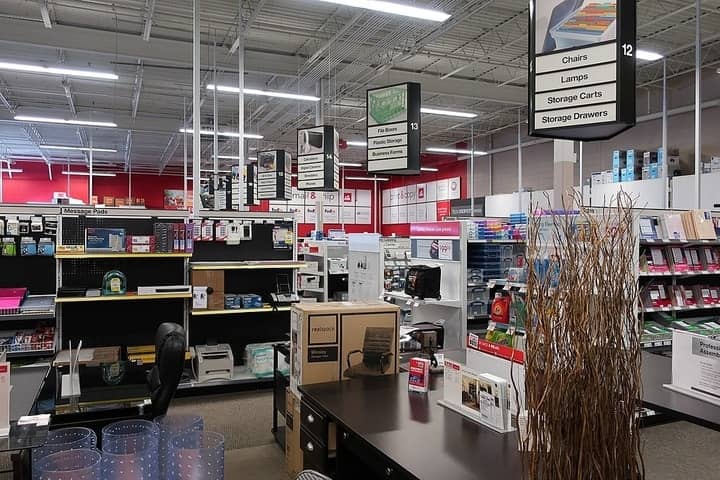
The office supplies retailer has been having difficulties since 2017 with its sales going down by 7 percent. CEO Gerry Smith announced that it was going to start offering services in an effort to improve the top-line. It has launched the subscription program “BizBox”. The company also acquired an IT firm called CompuCom. Let’s see how it goes for them.
Office Depot

Office Depot

Vitamin Shoppe

Vitamin Shoppe has shifted into zeroing in on e-commerce. It has also started a subscription service. Despite these efforts, it still experienced a top-line sales decline of 8.5 percent in 2017, which translated to roughly $1.2 billion. RetailDive has said that the company is suffering because fewer people are visiting the malls now. Vitamin Shoppe hopes that it can improve the tide with events, delivery services, and more categories.

Vitamin Shoppe

Vitamin Shoppe

Neiman Marcus

Neiman Marcus experienced a 5 percent decline in top-line sales during the 2017 fiscal year. It made various attempts to improve things. While they seem to be working, it is still suffering from interest expenses. Other suggestions involve laying off 200 people and focusing on a customer engagement plan called “Digital First”. Canadian company Hudson’s Bay once thought of buying it but plans fell through.

Neiman Marcus

Neiman Marcus

Bebe

The decline of Bebe’s sales started when creative director Neda Mashouf divorced founder Manny Mashouf and left the company. It is also a victim of lower foot traffic in malls. It experienced $4.6 million in operating loss back in 2017. It tried to fix the situation by avoiding the typical retail space. It spent $65 million to shutter physical stores and focus solely online. In 2016, Bebe had 180 stores in operation.

Bebe

Bebe

Pier 1 Imports

Strategy and research company Jeffries said Pier 1 was going to experience a “heavy investment year” in 2018 since it was going to handle its “sourcing, merchandising, pricing, marketing, store ops, e-com, and supply chain.” It saw a 9.2 percent decline in the net sales during 2018 Q1, which is equal to $371.9 million year over year. Not only did its credit rating go down, but Trump’s tariff against Chinese products made things even more difficult for the company.

Pier 1

Pier 1

Lands’ End

Land’s End has been hurt by its relationship with Sear’s, which went in a different direction back in 2013. While its catalog items sales remain strong, former CEO Federica Marchionni made certain mistakes. One such mistake happened with Canvas, a youthful brand that had been making attire in “designer styles to relaxed looks.” The brand failed to attract a lot of consumers, however. Ouch.

Lands' End

Lands’ End

Guitar Center

Guitar Center received a year to pay off its $900 million debt in 2018. Could it be that people are no longer buying guitars? Its figures for electric guitars went down by 36 perfect from 2005 all the way to 2016. The instrument retailer has been suffering from financial problems, yet it was able to open a number of stores. It solved this crisis by taking out emergency loans. An EVP explained that the company is now undergoing transition but going strong.

Guitar Center

Guitar Center

Southeastern Grocers

Southeastern Grocers, the operator of Winn-Dixie, filed for Chapter 11 in the hopes of restricting its debt. It shuttered nearly a hundred stores and paid $600 million in debt. The company wanted to remodel and rebrand the stores that are still in operation, which will hopefully improve the state of things. CNBC said that it is suffering from competition with both Amazon and big-box stores.

Southeastern Grocers

Southeastern Grocers

Nine West

Nine West is in debt for $1.5 billion, although it is working to restructure it. It has been sold parts of the company like Easy Spirit and filed for Chapter 11. It has ceased operations in all its stores except for 25 of these. On top of that, it plans to start focusing on jewelry lines and clothing since the demand for heels, ballet flats, and sandals has gone down.

Nine West

Nine West

David’s Bridal

It appears like more brides prefer less formal weddings with more casual events and attires. David’s Bridal is suffering because of this. The company has taken out a loan of $520 million, which is due in 2019, on top of $270 million in unsecured notes, which is due in 2020. CEO Scott Key is probably refinancing the debts, so let us hope that all goes well for the company.

David's Bridal

David’s Bridal

Bon-Ton

Bon-Ton applied for bankruptcy last year, after which it was sold and eventually liquidated. In October 2018, the retailer relaunched its e-commerce site and made reopening announcements. USA Today predicted, “The reinvented Bon-Ton would be sleeker, more e-commerce focused business.” While it was a big hit in the past, it has not been able to cope with competition from Amazon.

Bon-Ton

Bon-Ton

Tops Market

Tops Market is yet another fiction of the failure to keep up with the demands of its consumers. People have become interested in its competition, lower food prices, and non-traditional food vendors. Tops Market ended up filing for bankruptcy, although it continues to operate to this day.

Tops

Tops

Cole Haan

Cole Haan was part of the USA list of 26 companies in danger last 2018. It has tried to enter the athletic shoe market by focusing less on dress shoes and more on sporty sneakers. Cole Haan used to be owned by athletic shoe empire Nike, although Apax Partners bought it out in 2013. Now competing with its former parent company, it is not hard to see why it is now struggling.

Cole Haan

Cole Haan

Charlotte Russe

In March 2019, Charlotte Russ liquidated and halted operations in its stores. It applied for bankruptcy in February 2019, although it only planned to shut down 94 stores. It then became 500 stores after a liquidator took home the winning bid during its bankruptcy court auction. Its stores were commonly found in malls, so its sales have gone down with the amount of foot traffic in these establishments.

Charlotte Russe

Charlotte Russe

Claire’s

Do you remember getting your ears pierced as a teenager? Perhaps you got it done at Claire’s. Sadly, it has since ceased its IPO, which meant it was only a matter of time before it filed for bankruptcy in March 2018. It hopes that this will help it bring down its debt by $1.9 billion. It shut down 130 stores by May 2018. It hopes to find buyers and investors soon.

Claire's

Claire’s

FullBeauty Brands Holdings Corp

FullBeauty is yet another company that blames Amazon for the decline in sales. It is yet another company owned by Apax Partners. The parent company told its lenders that revenue went down by 30 percent during 2017 Q1. FullBeauty has since experienced executive changes, so let us hope that its new CFO, CCO, and CPO will make things better for the business.

FullBeauty

FullBeauty

Eddie Bauer

Eddie Bauer has been in trouble for debt. In 2017, its owners Golden State Capital hoped to sell it as an answer to these financial problems. The challenge is not new to the company since it already filed for bankruptcy in 2009, during which Golden State Capital bought it out. The brand has failed to keep up with trends, said NASDAQ. It seems like a Pacific Sunwear merger is on the horizon for the brand…

Eddie Bauer

Eddie Bauer

Bluestem Brands

Bluestem Brands was included in the list of at-risk companies released by Business Insider. In June 2018, a BusinessWire press release showed a decline in figures. Its net sales dropped by 10.9 percent at $38.1 million in 2017 Q1. The net sales did not include the exited businesses just yet! It decreased the net sales decline to 5.1 percent.

Bluestem

Bluestem

PetSmart Inc.

PetSmart felt the need to restructure in order to handle its $8 billion debt, although none of it is due to mature until 2022. It has been unable to adapt to the changing business scene. Other e-commerce sites have been found to be more convenient and even cheaper. It eventually bought Chewy, its own e-commerce site, although it shelled out an impressive $3.35 billion for it. We hope it will pay off!

PetSmart

PetSmart

Payless

Payless applied for bankruptcy, laid off employees, and shut down over 600 stores. Payless has since made its comeback after going through a reorganization in August 2017. Still, it remains in danger of not paying. There are still lots of Payless stores around the country. In 2017, CEO Paul Jones explained, “We have accomplished our goals of strengthening our balance sheet and restructuring our debt load, positioning Payless to create substantial value for our stakeholders.”

Payless

Payless

BKH Acquisition Corp.

BKH Acquisition Corp. has over 100 Burger King restaurants in Puerto Rico via Caribbean Restaurants. The company has been put on the Distressed Company Alert list by New Generation Research, Inc., give gave it a “low rating”. Credit analyst Olya Naumova said that S&P Global Ratings lowered its credit rating because of its credit crisis as well as the economic weakness in Puerto Rico.

BKH Acquisition Corp.

BKH Acquisition Corp.

Mattress Firm

Everyone needs a mattress, though fewer people are buying it from Mattress Firm. On October 5, 2018, the company applied for Chapter 11. The financial difficulties came about thanks to an accounting scandal as well as “an onerous store footprint.” Mattress Firm said it wanted to put 700 stores on the market and halt operations in 200 more in the hopes of freeing itself from leases and restructuring.

Mattress Firm

Mattress Firm

National Stores

National Stores applied for bankruptcy in August 2018. It said it planned to cease operations in 74 stores in both the U.S. and Puerto Rico. CNBC said this likely happened because National Stores bought a number of brands over the years and took on debts to do so. There are stand-alone shopping centers or open-air locations, which makes things more difficult.

National Stores

National Stores

Gump’s Holdings

Gump’s Holdings failed to find a buyer, so it filed for bankruptcy in August 2018. During the press release, it said that the “overwhelmingly difficult retail environment” made it hard to function. Its e-commerce service Gump’s By Mail could not compete with Amazon. It continues to look for a buyer, although it will continue to operate no matter what. Liquidators have taken on the task of repaying creditors as well.

Gump's

Gump’s

Brookstone

Brookstone also applied for Chapter 11 in August 2018. Aside from that, it wanted to shutter 101 stores in the United States. It has also been seeking a buyer, but this will be limited to its wholesale operations, e-commerce service, and airport locations.

Brookstone

Brookstone

Rockport

Rockport has been selling its products in around 60 countries. It applied for bankruptcy in May 2018 and got bought out by Charlesbank Capital Partners. The acquisition was finalized in July 2018. Let us hope that it will be able to bounce back now that it is under the private-equity group.

Rockport

Rockport

The Walking Company

The Walking Company is a shoe retailer that filed for bankruptcy in March 2018. Best known for comfy walking shoes, it previously did the same thing ten years ago. It seems like this was the right decision for the company since it was able to emerge from bankruptcy in July.

The Walking Company

The Walking Company

Kiko USA

Cosmetic product line Kiko USA is owned by Kiko Milano. In January 2018, the company applied for Chapter 11. It hoped to get its finances in order by shutting down nearly all of its US stores, which are located in malls. Kiko USA has been talking to landlords about lease renegotiations and lease terminations. Luckily, the parent company is doing better in other places in the world.

Kiko USA

Kiko USA

A’gaci

In January 2018, A’gaci filed for bankruptcy. The womenswear had been trying to renegotiate 49 leases. The press release claimed that it was spending two-thirds of expenses on leases. A’gaci bounced back from bankruptcy in 2018. They retained 1,500 employees and 55 stores. It also received approval on a $12 million loan last June!

A’gaci

A’gaci

Toys R Us

Toys R Us applied for Chapter 11 in 2018 and planned to liquidate all its stores. It launched big clearance sales in 735 stores across the country. Business Insider said it was trying to close shop as early as possible to prevent lease payments. However, the owners of the company canceled the bankruptcy auction in 2018, which opens the possibility of a comeback…

Toys R Us

Toys R Us

Bertucci’s

In the spring of 2018, Bertucci’s applied for bankruptcy. The Italian restaurant chain shut down 15 locations in April that year. It was eventually bought out by Earl Enterprises for $20 million, which was split into $4 million credit, $13 million debt, and $3 million cash.

Bertucci's

Bertucci’s

Gymboree

Gymboree filed for Chapter 11 in January 2019. After filing, it announced it would halt operations in its Gymboree and Crazy 8 stores. In March, it announced changes brought about by the fact that Children’s Place bought the stores. Aside from this, the Gap also paid for the various intellectual property of the brand.

Gymboree

Gymboree

Diesel USA

Diesel US applied for Chapter 11 on March 5, 2019. In the court documents, the company said that “general downturn in the brick-and-mortar retail industry” led to lower wholesale orders. It also suffered from high leases, low net sales, even fraud, and theft. Diesel reportedly wanted locations “with a smaller footprint” and a restructuring. Let us hope things turn around for the clothing line!

Diesel

Diesel

Imerys Talc America Inc.

Imerys Talc America provides Johnson & Johnson’s with talc powder. Its Paris, Vermont, and Canada units all filed for bankruptcy in February 2019 after suffering from 14,000 claims that said the product gave them ovarian cancer. Bloomberg said there is asbestos in the talc, which causes mesothelioma.

Imerys

Imerys

Pacific Gas and Electric (PG&E)

Pacific Gas and Electric filed for bankruptcy on January 29, 2019. This happened after the backlash it got for the 2017 and 2018 California wildfires. Interestingly, the company hopes to approve $235 million in bonuses for employees. “$235 million would go a long way to support the victims of last year’s wildfires,” said Senator Jerry Hill. It seems like the company needs to figure out its priorities!

PG&E

PG&E

Things Remembered

Things Remembered applied for bankruptcy on February 6, 2019. The company is known for personalized keepsakes and gifts. The gift and home décor retailer Enesco ended up buying the company, however. We are glad to hear that it will get to keep its own name as well!

Things Remembered

Things Remembered

Innovative Mattress Solutions

Innovative Mattress Solutions filed for bankruptcy on January 14, 2019. The following day, Mattress Warehouse released a statement that said, “This filing of Chapter 11 bankruptcy has no bearing on the Mattress Warehouse (sleephappens.com) organization or their relationships with their vendors.” This is because it shared the same name as a subsidiary of Innovative Mattress Solutions. In January 2019, USA Today said the company will likely shutter 142 stores.

Innovative Mattress Solutions

Innovative Mattress Solutions

Z Gallerie

Z Gallerie applied for bankruptcy on March 11, 2019. According to SF Gate, it was going to shut down 17 stores and look for a buyer in the hopes of preventing liquidation. Partly, this was because Z Gallerie did not invest enough in e-commerce while it poured money into distribution centers. It also failed to meet performance goals after investing a lot on the expansion. Let us hope it would not need to liquidate.

Z Gallerie

Z Gallerie

Beauty Brands

On January 4, 2019, Beauty Brands applied for Chapter 11. It allegedly sold a number of assets on the market. It was said that advertising master Bob Bernstein was interested in the company. The “stalking horse bidder” was the person who originally launched the beauty company, so this made sense!

Beauty Brands

Beauty Brands

Shopko

Business Insider says that Shopko applied for bankruptcy on January 16, 2019. It hoped to shut down 70 percent of its stores from February to May 2019 as it reorganized. USA Today said it was going to shutter 251 stores in February but leave 110 stores open. The plan involved closing fewer stores by December. Shopko spokesperson Michelle Hansen said, “Through our conversations with the potential buyers, it has become clear that it is in our best interest to operate with a significantly smaller store footprint.”

Shopko

Shopko

The Weinstein Company

It was only a matter of time before businesses linked to Harvey Weinstein would suffer after the sexual misconduct and harassment allegations came out in October 2017. He has been accused of various offenses by women from Ashley Judd to Rose McGowan. The Weinstein Company applied for bankruptcy in March 2018. Two months later, it was bought out by a Dallas-based private-equity firm called the Lantern Capital Partners.

Weinstein

Weinstein